phil shining
bio
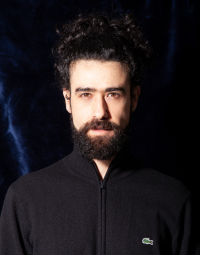
More than a paradox, it looks like a contradiction to present a biography replete of personal recollections, privileged experiences and apparent life
achievements when your presumed purpose is to promote selflessness and advocate for learning to lose the ego. Is between contradictions the only
way we get access to plenitude in the realization of our life’s intents? The reason why this bio was written was to fulfill the cultural demand of
providing the author’s personal information and, in this way, try to conjure some of the mainstream panic to impersonality. Total anonymity might
be ideal for an intent committed to encourage selflessness but, then again, idealism is not the option taken here; rather, the idea is to be practical
and contribute to the exploration of life’s possibilities. Who writes these words thinks that there are tons of issues and matters much more
interesting than talking about ourselves, for sure. However, this systemic demand can be used in other ways, in non-hegemonic ways, and that’s the
approach taken. A biography can be useful if it is designed and used as a form to understand when, why and how an author’s research was
developed in the first place.
The following information plus all the subsequent affirmations can be corroborated and supported. It is not fiction, although the author’s life is just
another story. It is not the product of imagination, even when an “author” is always just an illusion. The paragraphs to come are just the
unplanned itinerary of a journey that ultimately composes a curriculum. This bio can be used as a method of understanding where does the
research comes from and what is the life purpose driving the exploration. It is not about the person; it is all about what the person does. It is not
about personal importance; it is about sharing what has been embodied, lived, and experienced. A picture is not necessarily the portrait of a person,
but just the transitory image of an attitude or a spirit. Phil is just a name. An author is just a vehicle, while his ideas, concepts and proposals are the
passengers to meet, to interact or to debate with and, eventually, to start knowing better.
Phil Shining is an interdisciplinary researcher and writer focused on the exploration of the simultaneous intersections between sexuality,
aesthetics, politics, and spirituality, openly and decidedly for the purpose of generating knowledge on individual, collective and social
modes of empowerment without ego. His main areas of research are sex life cultivation, practice-oriented spirituality, arts of living, and
alternative ways of life.
Born in Bogotá, Colombia, he studies a simultaneous degree program of Communications and Political Sciences at Universidad
Javeriana, taking an emphasis option on Political Philosophy supported on credit courses offered in the Department of Philosophy of the
same university. Shining gets his B.A. in 2001 after writing a thesis project analyzing Gilles Deleuze’s concept of subjectivity in the book
Foucault; his thesis project was supervised by philosopher Santiago Castro-Gomez, and it was registered as part of the Jóvenes
Investigadores program hosted by Instituto Pensar, aimed to form critically conscious academic researchers. Shining becomes involved
with interdisciplinarity and critical theory since an early age, as a mentee of philosopher Castro-Gomez, making active part of the
pioneering cultural studies, post-colonial and subaltern debates and academic programs in South America’s universities during the dawn
of the 21 st century. Concurrently, taking in 2000 the History of Sexuality courses with a perfect grade, he decides to focus his research on
sexuality after becoming aware it constitutes today’s center of both subjectivity and biopolitics. This is how Shining embraces Foucault’s
ars erotica, aesthetics of existence and arts of living inquiries, plus Deleuze’s perspective of living a life without subject and a
subjectivity without identity.
From early on Shining learns, concretely, how to develop interdisciplinary research projects assembling cultural studies, social sciences,
and philosophy, studying in depth the work of critical theorists and post-structuralist French philosophers Michel Foucault, Gilles
Deleuze, Félix Guattari, and Jean Baudrillard. Between 2002 and 2003 Shining lives in Paris, France, where he dedicates to study in
French the work of Foucault, Deleuze, Guattari, and Baudrillard while he attends the Cours de Civilisation Française de La Sorbonne
(CCFS) at the Université Paris-Sorbonne IV. Back in Colombia, he works as assistant professor between 2004 and 2008, developing
courses on History of Arts and Communication at the Universidad El Bosque and courses on Political Philosophy at the Universidad
Central in Bogotá. During those years he diffuses his first DIY publications, in the form of underground action guides on street art
performance inspired on the teachings of Carlos Castaneda, tracing the intersections between politics, aesthetics, and his growing interest
in non-religious forms of spirituality. With Castaneda’s influence, it becomes clear that the central axis of Phil Shining’s interdisciplinary
research is the problem of the ego, and all his work can be understood as a present-day genealogy of the ego, an empirical exploration of
both the personal and social limitations caused by egocentrism; this leads to a very concrete research question: how can we empower
individual and communal lives at the same time we learn to live selfless lives and lose our egos?
Shining takes a sabbatical year to travel across India, Nepal, and Mexico in 2009, before living some months in New York, USA. During
that year he dedicates to improve and refine his skills in Hatha Yoga, which he had practiced since early on, and also gets introduced into
Chi-Kung; instead of affiliating to a single school of training he chooses to practice with dozens of different schools—as a conscious
research exercise tracing the variations and differences between the multiple approaches to the Eastern ancient arts of living available
today as products in the New Age market. Additionally, he explores the vast supply of Tantra courses offered in India and Nepal, going
from Shivaism or strictly Vajrayana Buddhism to diverse Neo-Tantra adaptations of ancient teachings—travelling from McLeod Ganj,
Kasol, or Pokhara, at the foot of the Himalayas, to GOA, Varkala, or Auroville in the coastal region of the subcontinent, meeting and
learning from vibrant communities reconfiguring ancient knowledges and experimenting alternative ways of life. From then on, Shining
deeply engages with inner cultivation traditions approaching sexual activity as a spiritual practice. He focuses his spiritual exercising on
the daily sexual practice of mastering ejaculation, empirically implemented in his sex life since 2002, while living in Paris, and now
grounded on the teachings of Taoism, Buddhism, Yoga, and Tantra. Mastering ejaculation becomes, not only a health and well-being,
physical, empowering practice, but the spiritual practice that had allowed Shining to understand what does it means to cultivate
selflessness through sex life, and feel the vocation of serving the other without any kind of servitude—a very concrete form of
empowering life without egocentrism. Apart from Taoist and Tantric exercises, Shining’s main sources of spiritual practice become
Vipassana and other meditation techniques learned from Buddhism and Yoga, plus the entheogenic and psychonautic experiences that
originally constitute the spiritual foundations in his life, like Amazonia’s ayahuasca.
Between 2010 and 2014 Shining resides full time in Barcelona, Spain, where he completes his M.A. on Philosophy of Art at Universitat
Autònoma, consisting of two complementary Master studies: Màster en Gramàtiques de l’Art Contemporani and Màster en Estètica i
Teoria de l’Art Contemporani—the two programs provided at the time by the Departament de Filosofia of the Universitat Autònoma de
Barcelona. His M.A. thesis project was focused on the problem of art and self-management, designing an alternative concept to the
hegemonic concept of the World of Art—which is attached to the social roles of artists and its Fine Arts works. The concept of art
recovered by Shining is based on the process of learning to master a practice; that is, any kind of daily practice can become an art if it is
properly cultivated—a perspective, actually, in resonance with ancient and classical uses of the word “art.” Through this research
developed in Spain he continues with his recurrent approach of highlighting avant-garde and DIY artistic initiatives. Consequently,
Shining makes the decision of postponing indefinitely his PhD after realizing colleges and universities are not producing cultural cutting-
edge knowledge anymore and after confirming the absence of authentic critical thinking spaces in the academy today. Yet, not only
morality and political correctness function as hindrances of research on sexuality, as he has personally experienced. Authentic critical
theory is not developed in the academy today due to the capitalist corporatization of universities—research on sexuality is one of its more
evident cases: it is centered on the scientia sexualis of gender issues functional to biopolitics and normalization, while it excludes
research on the well-being potential of ars erotica and ecstasy. Therefore, Shining chooses to investigate independently, combining his
formation on political philosophy and philosophy of art with his cultural studies inquiries and his physical spiritual practices.
As a joyful act of coherence and integrity Phil Shining decides to work as an independent interdisciplinary researcher supported on his
previous academic background, his articulated self-learning processes, his experience assembling different types of knowledges, his
ability of writing in both English and Spanish, and his capacity of reading texts and investigating in English, Spanish, French, and
Catalan. Shining starts his own advanced, self-directed academic research project on the subject of the arts of living, assembling
Foucault’s conceptualization of the arts of existence with the practical knowledge generated through his personal physical exercising
centered on the practices of both Eastern and Western Axial arts of living— Taoism, Buddhism, Yoga, and Tantra, but also Epicureanism
and Stoicism, plus contemporary practices like Castadenas’ actualization of North American ancestral knowledges. In this intent, Shining
assembles the study of Religious Studies scholar texts—including the study of translations of ancient scriptures—and the daily empirical
practice of very particular sets of exercises, tracing critical intersections between aesthetics—an aesthetics of existence—and spirituality.
With this methodological approach, assembling theoretical/historical information and physical/practical knowledge, Shining embraces an
embodied and critical-constructivist exploration of the arts of living, grounded on scholarship but also empirically tested through his daily
practice of what Pierre Hadot calls “spiritual exercises;” his approach to philosophy resonates in this way with Hadot’s vision of the
original philosophic activity among ancient Greeks, not as a theoretical matter, but as an everyday life practice: a daily life
implementation and experimentation.
Opening a long-term interdisciplinary research on the arts of living allows Shining to integrate his inquiry on non-religious spirituality
into an investigation that contributes to the exploration of alternative actions and solutions to challenge the global political oppressions
and the biopolitics of our time and, at the same time, keep his long-standing focus on sexuality. There is a non-religious spirituality
potential intrinsic to the arts of living, as they facilitate the cultivation of selflessness through their practices; the arts of living are the key
to develop non-egocentric ways of life and an active way of learning how to live an empowered life without ego. In this sense, this
central research topic of Shining’s long-term investigation embraces late Foucault’s exploration on the arts of existence as a way of
answering to governmentality, as also fits in with Deleuze’s and Guattari’s conceptual tools for individual and social emancipation: the
arts of living as counter-conducts yet, even more, as lines of flight and a daily embodiment of becoming-revolutionary, because there’s
nothing more revolutionary in times of individualism than learning to live non-egocentric lives. However, to explore the non-religious
spirituality intrinsic to the arts of living with the objective of envisioning alternative ways of life demands, necessarily, to study with
attention its sexuality dimension, as it constitutes the epicenter of self-inquiry and subjectivity production plus the very core of
biopolitical governmentality. The pertinence of sexuality goes far beyond than its ars erotica component: it is, above all, the ethical
dimension of sexuality what makes it a top priority—and the relevance of ethics in both individual and social transformation is what
makes spirituality pertinent today: so, the scope of ethics is where sexuality and spirituality critically intersect. Certainly, the research on
the arts of living is what allows Shining to interconnect politics, aesthetics, sexuality and spirituality. Yet, after his pre-graduate
formation on political philosophy and his post-graduate scholarly formation on philosophy of art, what Shining needs to get immersed
into now is in the overlappings of the contemporary spheres of sexuality and spirituality. Thus, he decides to focus the initial itineraries of
his long-term research on the exploration of the intersections between sexuality and spirituality.
Following the principles of his empirical-constructivist methodology, the initial focal point of Shining’s long-term research on the arts of
living is to explore both scholarly and experientially the intersections between sexuality and spirituality. Scholarly, he studies from 2012
to 2014 several Religious Studies texts analyzing the continuities and discontinuities between the millenary Eastern and Western
traditions, and from 2014 to 2018 he presents partial outcomings of his research in different types of academic events, including
seminars, conferences, and symposiums. Because of its interdisciplinarity, Shining’s scholarly research gets accepted in events affiliated
to heterogeneous fields of study, including philosophy, cultural studies, and social sciences. Phil Shining reads his papers in several cities
acknowledged by their scholarly research excellence like Santiago de Chile, Brasilia, Oxford, and Berkeley, among others. After Bogota,
and after his first international conference in Ecuador, between 2015 and 2018 he presents the outcomes of his research on philosophy
and religious studies in countries like Brazil, Chile, and Argentina. In the year 2016 he participates in the I Global Conference on
Sexuality and Spirituality, at Mansfield College, in the University of Oxford, England, conducted by Śean Morin, and he becomes elected
as the editor of their corresponding Interdisciplinary.Net publication. In the year 2018 he closes his cycle of international conferences
participating in the VIII International Conference on Religion & Spirituality in Society, at the University of California, in Berkeley,
California, US. In these events Phil discusses evidences of the history of sexuality and spirituality, the commonalities between the Axial
traditions, the implications of the New Age interpretations of millenary knowledge, and some of the alternative spiritual perspectives, like
the arts of living.
Experientially, Phil Shining’s task in the second decade of the century becomes working as a mixture of personal counselor and physical
trainer, just to gain direct empirical experience regarding both people’s demands and collective necessities related to sexual activity and
sex life in general. To accomplish this task professionally, while still living in Catanluya, he graduates as an Expert Universitari en Salut
Sexual. Intervenció Educativa i Comunitària in the Institut d’Estudis de la Sexualitat at the Universitat de Lleida, in 2012. With the
credentials required to impart sex education programs among communities, he works independently as a person-to-person counselor and
physical trainer in Barcelona and Bogotá, from 2012 to 2022, completing ten years of fieldwork experience; he offers philosophical
counseling sessions as an alternative to mainstream psychotherapy and normalizing psychology/sexology. He had worked mostly long-
term processes with practitioners from Spain, France, Israel, Argentina, and Colombia—training women and men, including diverse
genders and sexual orientations—, and later on organizing workshops with the Conexión Sexual brand in Bogotá’s Zona G, plus group
sessions with the foundation El Camino del Corazón. Shining’s workshops where focused on guiding self-directed learning processes of
practices like mastering ejaculation and vitality cultivation, while his personal counseling and physical training dealt with issues like
premature ejaculation, erectile dysfunction, sex addiction, lack of sexual pleasure, loss of vitality, or couple conflict, among others,
accessing in this way to a practical knowledge impossible to access just through scholarly activity—maybe even learning here more than
ever before. Phil Shining’s personal counseling model is a combination of philosophical/arts of living counseling, sexual health, and a
guided training of sets of ars erotica and arts of living exercises—including Hatha Yoga and Chi-Kung, plus determined Buddhist,
Yogic, Taoist, and Tantric techniques along some complementary Castaneda’s, Stoicism’s and Epicureanism’s teachings—tested as an
alternative to clinical treatments, sexology’s focus on dysfunctions, the dependence to pharmaceutical procedures, and the medicalization
of life problems.
During his counseling years Shining witnessed the popular demand of alternative methods to manage the ups and downs of their love/sex
lives, confirming the limitations of psychology as the only authorized academic source of knowledge for sexuality, just because the
conceptual foundations of psychology are the self and the ego, and this prevents any real critics to—or any authentic deactivation
of—egocentrism. Nonetheless, Shining also attested the normalizing potential of New Age circuits and the corporative spirit of many
initiatives taking advantage of the word Tantra driven by the self-interested objective of building communities for money, or sometimes
for the masters’ or gurus’ personal recognition. That’s why Shining decides to focus his contribution to the generation of knowledge and
to bridge the rigor of academia with the real-life problem-solving vocation of social workers; the best way to avoid the negative
dependence to masters and gurus is to focus on generating knowledge. In this way, after committing during a decade to explore
simultaneously scholarly and experientially the intersections between sexuality and spirituality, Phil Shining founds in 2020 the Sexuality
and Spirituality Research Network (S&SRN), a not-for-profit educational organization dedicated to the production and diffusion of
interdisciplinary research on topics like adult sex education, alternative sexualities, arts of living, erotic arts, and non-religious
spirituality, yet from a critical theory and critical thinking perspective. Through the S&SRN researchers from different regions of the
world interact with each other and discuss their work, designing books and publications; currently, Associate Professor of
Communication at Florida Gulf Coast University, queer theory teacher and researcher, Dr. Jon Braddy, collaborates as S&SRN’s Senior
Advisor on gender issues. Furthermore, the academic and critical thinking foundations of the S&SRN are complemented with practical,
non-academic, and non-Eurocentric—some of it ancestral, some other subaltern—knowledges.
As the director of the S&SRN in the 2020’s, additionally to his work as a writer and researcher, Shining has served as the chief editor of
its peer-reviewed scholarly publications. Phil Shining is the main author and editor of two books published by Brill—the prestigious
Dutch international academic publisher active since 1683—, making part of its critical studies series’ compilations. His first book is
Exploring Sexuality and Spirituality: An Introduction to an Interdisciplinary Field (Brill, 2020), with Nicol Michelle Epple as co-editor.
In Exploring Sexuality and Spirituality Phil Shining presents a synthesized history of the intersections between sexuality and
spirituality—recommended as a guide to all kind of people interested in the study of this subject—, while in his essay included in this
first book he develops an interdisciplinary research on sexual trance and presents an immanent model of comprehension of the mystical
experience. After the COVID-19 pandemic breaks out he returns to his initial inquiry as a student, tracing the ongoing intersections
between sexuality and politics. Shining’s second book is Sexuality and Eroticism in a Post-Pandemic World: Beyond the Biopolitics of
the New Normal (Brill, 2023), with Jon Braddy as co-editor and contributor. In Sexuality and Eroticism in a Post-Pandemic World
Shining shares a diagnostic of the current conditions of sexuality in the globalized world of the 21 st century and its biopolitical function as
part of the renovation of the governmentality regime coexistent to capitalism, in which a cultural change identified as “the new
normality”—supported in the technologies of artificial intelligence, automation and virtual reality—reconfigures sex, relationships,
gender awareness, and subjectivity production. At the end of the book he goes further, presenting an action-proposal in response to the
biopolitics of the new normal; in his essay included in this collection, Shining describes and analyzes the principles and the foundations
of sex life cultivation, a present-day alternative culture of sexuality self-management and sexuality self-directed learning exploring sexual
activity as a source of ecstasy but also of vitality, health, wellness, well-being, and spirituality. Through today’s biopolitics of the new
normal self-regulation and self-care become mainstream habits among majorities—including sexual minorities and non-binary
sexualities—and, in this way, consolidate the diffusion of egocentric cultures and the dissemination of individualistic ethics all over the
planet. Alternatively, sex life cultivation practitioners challenge the self-centered ethical models of mainstream culture all across the
globe while cultivating principles like cosmic consciousness and critical selflessness, embracing an ethical transformation absolutely
compatible with gender equality, individual empowerment, and collective or social empowerment as well. Using Foucault’s concepts as a
form of explanation, sex life cultivation constitutes a fusion between an ars erotica and an aesthetics of existence, the former always in
function of the latter, that is, of an art of living.
Phil Shining creates the concept of sex life cultivation to explain a reality that is already happening today, that is, the exploration of
alternative modes of living sex life by alternative communities all around the world, generally supported in ancient, millenary teachings
combined with contemporary ideas and current information. Indeed, the core of Phil Shining’s research is the concept of sex life
cultivation and the study of the multiplicity of practices constituting its development and fulfillment. The knowledge generated through
the daily cultivation of sex life is an empirical knowledge based on self-directed, voluntary and consented sexual experimentation along
with complementary body cultivation exercises; moreover, when it is guided by the ancient wisdom of the Eastern and Western Axial arts
of living, it becomes a territory for spiritual growing because of the non-egocentric nature of their spiritual exercises and their teachings.
That’s why Shining’s recommended approach to sex and sexuality is spiritual: because spirituality is the cultivation of selflessness—and
there’s nothing more revolutionary in times full of self-centeredness and individualism than building our daily life embodying a non-
egocentric ethical approach. Notwithstanding, to transform sex life today it is necessary something else. In order to empower sex life,
selflessness must be complemented with critical thinking: it is fundamental to become critically conscious of the effects of the social
practices we reproduce and of the ethical implications of our own sexuality; above all, sex life cultivation implies an ethical
transformation, and for that aim, it is paramount to become aware of the politics intrinsic to sexuality and the power relations in which
our lives are entangled. As an example of the complementariness of this combination, Shining’s nuanced approach to sex and sexuality is
spiritual but not religious: it is focused on cultivating selflessness, yet always keeping a critical attitude towards hegemonic institutions,
its narratives and its derivative coercions.
Shining suggests that spirituality in the 21 st century requires an integral consciousness of the social reality surrounding us that implies
necessarily critical thinking and political consciousness; the spiritual potential of any life is related to its capacity to avoid control,
governmentality and all forms of patriarchal, religious, and capitalist structures of oppression, as also to confront tyranny and social
injustice—this is a condition of required before letting go of all struggles and ultimately surrendering to the immanent divinity inherent to
nature, Earth, and the cosmos. Sexuality as a strategic territory to cultivate spirituality and ethics based on solidarity; spirituality as the
mode to cultivate the required selflessness; aesthetics as the best manner of approaching our existence, stylizing, designing and
constructing our life; and political consciousness as a way to check and counterbalance the power relations in which our sexualities and
our lives in general are involved, because the realization of spirituality depends on the socioeconomic conditions of existence. Political
consciousness always in function of life plenitude and spiritual growing, though: it is important to note that political battles are not the
end, the ultimate end in sex life cultivation as in any other spiritual path is no other thing than surrender: surrender to the absolute of the
cosmos, surrender to the forces of love and life itself. That’s sex life cultivation: an example of practice-oriented spirituality. Phil Shining
is in charge of the content creation supporting S&SRN’s groundbreaking adult sex education course We Live a Sex-Positive Life: The
Handbook to Sexual Empowerment, streamed through social media since 2025. We Live a Sex-Positive Life is a transdisciplinary project
bridging academic research with popular spaces of self-directed learning, developed with the purpose of generating knowledge on sex
and sexuality without costs and through free accessibility for anyone interested, from young adults to older and senior adults as well. This
is S&SRN’s contribution to the generation of knowledge among communities without possibilities of paying for their educational
processes: free access content that encourage audiences to engage with self-directed learning processes and to embody technologies of
selflessness. It is just another sand of grain added by Phil Shining to the present-day transnational collective construction of new ways of
life as an alternative to the global empire of ego.